 ENG
ENG हिन्दी
  Aries
Aries Taurus
 Gemini
 Cancer
 Leo
Leo Virgo
Virgo Libra
Libra Scorpio
 Sagi
Sagi Capri
Capri Aquarius
 Pisces
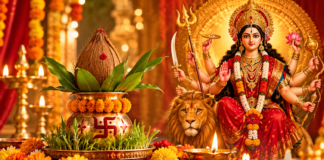
Shardiya Navratri 2026 is one of the most important Hindu festivals dedicated to Maa Durga and her nine divine forms, known as Navdurga. The festival is observed for nine days with devotion, fasting, prayers, mantra chanting and special worship.
Shardiya Navratri is associated with the worship of Shakti, the divine feminine energy. For devotees, these nine days provide an opportunity to spend more time in prayer, maintain spiritual discipline and seek the blessings of Maa Durga.
Shardiya Navratri 2026 Date
Shardiya Navratri begins with Ashwin Shukla Pratipada, the first day of the bright fortnight of the Hindu lunar month of Ashwin.
Navratri Begins: 11 October 2026, Sunday
Ghatasthapana: 11 October 2026
Durga Ashtami: 19 October 2026
Maha Navami: 19 October 2026
Vijayadashami/Dussehra: 20 October 2026, Tuesday
The lunar tithi timings can cause more than one traditional observance to fall on the same Gregorian date. Therefore, devotees following a particular family or regional Panchang should follow the local tithi for detailed rituals.
Ghatasthapana Muhurat 2026
Ghatasthapana, also called Kalash Sthapana, marks the beginning of Navratri worship. A Kalash is ceremonially established as part of invoking Maa Shakti.
Ghatasthapana Muhurat: 6:19 AM to 10:12 AM
Duration: Approximately 3 hours 52 minutes
Abhijit Muhurat: 11:44 AM to 12:31 PM
The main Ghatasthapana Muhurat falls during Pratipada Tithi. Panchang timings can vary by location, so people living outside Delhi should check the timings for their own city.
What Is Ghatasthapana?
Ghatasthapana is one of the important rituals performed at the beginning of Navratri. A sacred Kalash is established at the place of worship, and barley seeds are traditionally sown near or around it as part of the ritual.
The Kalash represents auspiciousness and the presence of divine energy. The growing barley during Navratri is also traditionally associated with growth, prosperity and the cycle of life.
The Kalash should be placed in a clean and suitable puja space, and the ritual should be performed according to the family’s religious tradition.
Ghatasthapana Puja Vidhi
Before beginning the puja, clean the house and especially the area where the Kalash will be established. Take a bath and wear clean clothes.
Prepare a clean wooden platform or puja chowki and place clean soil in a suitable vessel. Barley seeds can be sown in the soil according to the traditional method.
A Kalash is then prepared with clean water and customary puja items. Mango leaves or other leaves prescribed by one’s tradition may be placed around the mouth of the Kalash, followed by a coconut placed on top.
The Kalash is then worshipped with roli, kumkum, flowers, akshat and other traditional puja materials. A diya and incense can be lit before beginning prayers to Maa Durga.
After Ghatasthapana, devotees may recite Durga mantras, Durga Chalisa, Durga Saptashati or other prayers according to their tradition.
Maa Durga’s Nine Forms Worshipped During Navratri
Each day of Shardiya Navratri is traditionally dedicated to one form of Navdurga.
Day 1 – Maa Shailputri: Associated with strength, stability and devotion.
Day 2 – Maa Brahmacharini: Represents , patience and spiritual discipline.
Day 3 – Maa Chandraghanta: Associated with courage, peace and protection.
Day 4 – Maa Kushmanda: Revered as a form associated with creative energy and vitality.
Day 5 – Maa Skandamata: Worshipped as the motherly form of the Goddess and associated with compassion.
Day 6 – Maa Katyayani: Traditionally associated with courage, power and protection.
Day 7 – Maa Kalaratri: Represents the powerful aspect of Shakti and is traditionally worshipped for protection from negativity.
Day 8 – Maa Mahagauri: Associated with purity, peace and spiritual grace.
Day 9 – Maa Siddhidatri: Worshipped as the form associated with spiritual accomplishment and divine blessings.
The worship of these nine forms allows devotees to reflect on different aspects of Shakti throughout the nine days.
Navratri Puja Samagri
The exact puja samagri can vary according to family and regional traditions. Common items used for Navratri worship include a Kalash, coconut, mango leaves, clean water, barley seeds, roli, kumkum, akshat, flowers, diya, ghee or oil, incense, fruits and sweets.
For Ghatasthapana, it is better to arrange the required items beforehand so that the ritual can be performed peacefully during the appropriate Muhurat.
Navratri Vrat
Many devotees observe a fast during Navratri. However, fasting does not necessarily have to mean complete abstinence from food.
Depending on personal and family tradition, people may consume fruits, milk, nuts and specially prepared vrat food. Some devotees observe a fast on all nine days, while others fast on selected days such as Ashtami or Navami.
The purpose of the vrat is traditionally associated with devotion, self-discipline and prayer. People with medical conditions, those taking regular medicines, pregnant women and elderly individuals should choose their fasting routine according to appropriate medical advice.
Preparation: Navratri
During Navratri, devotees traditionally keep their homes and puja area clean and maintain a peaceful atmosphere.
Daily prayer, diya lighting, mantra chanting and reading devotional texts can become part of the routine. Some families also perform Durga Saptashati or other forms of Devi worship.
Charity and helping people in need are also considered meaningful ways of spending the festival period. Offering food or donating according to one’s ability can add a spirit of kindness to the celebration.
What we Should Avoid:
Practices can differ between families and communities, but many devotees traditionally avoid alcohol, non-vegetarian food and certain grains during their vrat.
People who are observing Navratri according to a particular religious tradition may also follow specific rules regarding food, daily routine and worship.
Rather than following every practice found online, it is better to follow one’s family tradition or the guidance of a knowledgeable priest.
Navratri Ashtami and Kanya Pujan
Kanya Pujan is an important tradition for many families during Navratri. Young girls are respectfully invited for a meal and worshipped as symbolic representatives of feminine divine energy.
Families commonly perform Kanya Pujan on Ashtami or Navami, depending on their tradition. The girls are offered food, gifts and blessings, and their feet may be respectfully washed as part of the customary ceremony.
The exact age and number of girls invited can vary according to regional and family customs.
Navratri Mantra
Devotees can chant simple mantras during their daily worship. One commonly recited mantra is:
“ॐ दुं दुर्गायै नमः”
Om Dum Durgayai Namah
The mantra can be recited during morning or evening prayer according to one’s convenience and religious tradition.
Devotees may also recite Durga Chalisa, Durga Saptashati or other Devi stotras during Navratri.
Why Is Shardiya Navratri Important?
Shardiya Navratri holds an important place in Hindu religious tradition because it is dedicated to Shakti and the worship of Maa Durga in her different forms.
The festival is also associated with the traditional story of the victory of Goddess Durga over Mahishasura. This is understood as a symbolic representation of the victory of dharma over adharma and divine strength over destructive forces.
For devotees, the nine days are a period of prayer, discipline and devotion. The festival also brings families and communities together through temple visits, devotional music, fasting and celebrations.
Navratri and the Spirit of Shakti
The deeper significance of Navratri lies in recognising the importance of Shakti—the divine feminine power. The nine forms of Maa Durga represent different qualities such as courage, patience, compassion, wisdom, strength and spiritual discipline.
The festival gives devotees an opportunity to reflect on these qualities in their own lives while maintaining a connection with their religious traditions.
Vijayadashami 2026
The nine-day Navratri observance concludes with Vijayadashami, or Dussehra, on Tuesday, 20 October 2026. It is traditionally associated with the victory of good over evil and holds great religious and cultural significance across India.
For many devotees, the end of Navratri is a time to offer gratitude to Maa Durga, complete the concluding rituals and seek blessings for peace, prosperity and strength.
Navratri 2026: A Time for Devotion and Renewal
Shardiya Navratri is much more than a nine-day festival. It brings together worship, fasting, family traditions and devotion to Maa Durga. Whether one observes all nine days with elaborate rituals or simply lights a diya and offers daily prayers, the festival provides an opportunity to bring greater discipline, positivity and devotion into everyday life.