 ENG
ENG हिन्दी
  Aries
Aries Taurus
 Gemini
 Cancer
 Leo
Leo Virgo
Virgo Libra
Libra Scorpio
 Sagi
Sagi Capri
Capri Aquarius
 Pisces
Radha Ashtami 2026 is an important Hindu festival dedicated to Shri Radha Rani. It is celebrated on the Ashtami Tithi of Shukla Paksha in the month of Bhadrapada and is traditionally regarded as the appearance day of Radha Rani. The festival is observed with devotion by devotees of Radha and Krishna, particularly in the Braj region including Barsana, Vrindavan and Mathura.
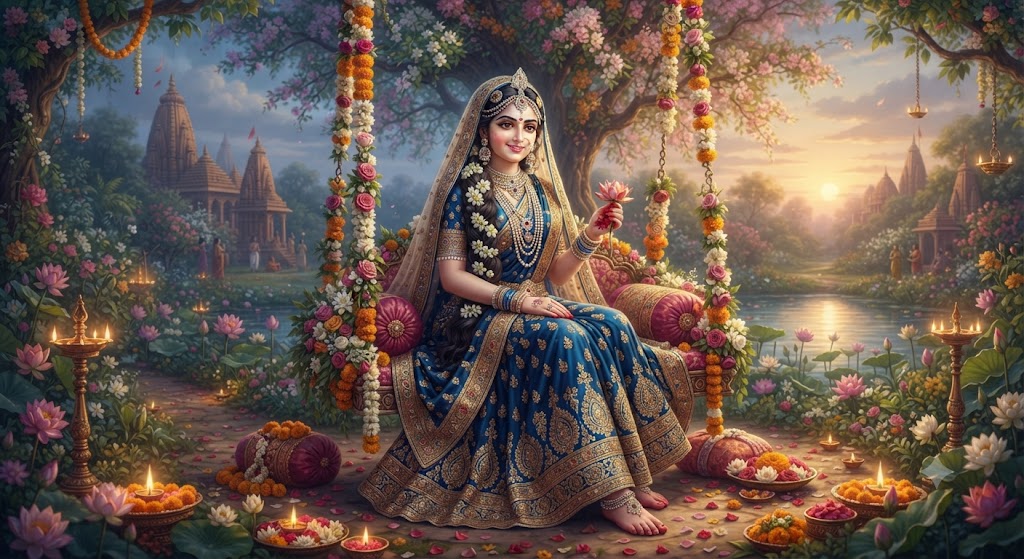
In 2026, Radha Ashtami will be observed on Saturday, 19 September 2026. The festival falls fifteen days after Janmashtami and is marked by special prayers, fasting, abhishek, bhajan and worship of Radha-Krishna.
Radha Ashtami 2026 Date and Tithi
According to the New Delhi Panchang, Bhadrapada Shukla Paksha Ashtami Tithi begins on 18 September 2026 at 1:00 PM and ends on 19 September 2026 at 3:26 PM. Since the relevant Ashtami falls on 19 September during the daytime, Radha Ashtami will be observed on Saturday, 19 September.
Radha Ashtami 2026
Date: Saturday, 19 September 2026
Tithi: Bhadrapada Shukla Paksha Ashtami
Ashtami Tithi Begins: 18 September, 1:00 PM
Ashtami Tithi Ends: 19 September, 3:26 PM
Madhyahna Puja Muhurat in New Delhi: 11:01 AM to 1:28 PM
Panchang timings can vary slightly from one city to another, so devotees who follow a specific regional Panchang should check the timings applicable to their location.
Why Is Radha Ashtami Celebrated?
Radha Ashtami celebrates the appearance of Shri Radha Rani, who occupies a central place in several Vaishnava devotional traditions. Radha is traditionally associated with pure devotion, प्रेम and selfless bhakti towards Shri Krishna.
The festival gives devotees an opportunity to focus on devotion, humility and spiritual connection through prayer and remembrance of Radha-Krishna. In Braj, the occasion is celebrated with special enthusiasm, devotional singing and temple ceremonies.
Radha Ashtami Puja Vidhi
On Radha Ashtami, devotees traditionally begin the day by taking a bath and cleaning the puja area. A picture or idol of Radha Rani along with Shri Krishna can be placed on a clean altar and decorated with fresh flowers.
The main worship is traditionally performed around the Madhyahna period, or midday. In New Delhi, the 2026 Madhyahna Puja Muhurat is from 11:01 AM to 1:28 PM.
The idol or image may be offered water and, according to family tradition, a Panchamrit abhishek can be performed. After the abhishek, devotees may offer clean clothes, flowers, jewellery or other traditional decorations.
Dhoop and diya are then lit, followed by offerings of fruits, sweets and other suitable bhog. Devotees can chant Radha-Krishna mantras and perform aarti with sincere devotion.
The exact puja procedure can differ according to family and Vaishnava tradition. Therefore, there is no need to make the worship unnecessarily complicated; a simple and sincere prayer is also an appropriate way to observe the festival.
Radha Ashtami Vrat
Many devotees observe a fast on Radha Ashtami. The form of fasting can vary according to personal health, family tradition and the devotee’s religious practice.
Some devotees observe a strict fast, while others take fruits, milk or permitted vrat food during the day. Those who are unable to keep a full fast can choose a simpler form of observance and concentrate on prayer and devotion.
People with diabetes, other medical conditions, pregnancy or medication requirements should not undertake a strict fast without appropriate medical advice. Religious observance can be adapted according to one’s health and circumstances.
The timing of the vrat and parana can also differ according to tradition. Devotees following a particular sampradaya or family custom should follow that tradition.
Radha Rani Mantra
A simple and widely used devotional chant for Radha Rani is:
“ॐ राधायै नमः”
Om Radhayai Namah
Devotees may chant the mantra with a mala or simply repeat it peacefully during their prayer. Another simple devotional practice is chanting:
“Radhe Radhe”
The purpose of mantra chanting is to focus the mind on devotion and remembrance rather than simply counting the number of repetitions.
Radha Ashtami Puja Samagri
For a simple home puja, devotees may keep flowers, fresh leaves, diya, incense, roli, kumkum, sandalwood, fruits, sweets and water. Panchamrit ingredients may also be used if an abhishek is being performed.
Fresh flowers and traditional bhog can be offered according to the family’s customs. There is no requirement to collect an unnecessarily large number of items; clean surroundings, devotion and respectful worship are central to the observance.
Bhog for Radha Rani
Devotees traditionally prepare sweets, fruits and other vegetarian offerings for Radha Rani. Some families prepare special homemade dishes or traditional bhog associated with their regional customs.
The offering can then be distributed as prasad among family members after the puja.
Radha Ashtami and Radha-Krishna Worship
Radha Ashtami is closely connected with Radha-Krishna devotion. While Janmashtami celebrates the birth of Shri Krishna, Radha Ashtami is observed fifteen days later as the appearance day of Shri Radha.
The two festivals together form an important part of the devotional calendar for many Krishna devotees. Radha Ashtami is therefore not only a day for ritual worship but also an occasion to reflect on the importance of bhakti and devotion in the Radha-Krishna tradition.
Radha Ashtami Celebrations in Barsana and Vrindavan
Radha Ashtami has particular importance in Barsana, traditionally associated with Radha Rani, as well as in Vrindavan and other parts of the Braj region. Temples hold special celebrations, devotional programmes and ceremonial worship on the occasion.
The atmosphere during the festival is marked by bhajans, kirtan, flowers and Radha-Krishna devotion. These celebrations attract devotees who wish to experience the traditional Braj style of worship.
Simple Radha Ashtami Puja at Home
For those observing Radha Ashtami at home, the day can begin with cleanliness and a peaceful prayer. After setting up Radha-Krishna images or idols, devotees can offer flowers, diya, incense and bhog.
During the Madhyahna period, the main puja can be performed with abhishek, mantra chanting and aarti according to one’s family tradition. After the worship, the bhog can be offered as prasad to family members.
The festival can also be observed by listening to Radha-Krishna bhajans, reading devotional stories and spending some quiet time in prayer.
Spiritual Significance of Radha Ashtami
Radha Ashtami represents the devotional relationship between Radha and Krishna and the importance of sincere bhakti in Vaishnava traditions. Radha Rani is revered as an embodiment of deep devotion and divine love.
For devotees, observing this festival can become an opportunity to bring more prayer, gratitude and devotion into everyday life.