 ENG
ENG हिन्दी
  Aries
Aries Taurus
 Gemini
 Cancer
 Leo
Leo Virgo
Virgo Libra
Libra Scorpio
 Sagi
Sagi Capri
Capri Aquarius
 Pisces
Navratri is one of the most sacred festivals dedicated to Maa Durga and the divine feminine power, known as Shakti. During the nine days of Shardiya Navratri, devotees worship nine different forms of Maa Durga, collectively known as Navdurga. Each form represents a distinct aspect of divine energy, from courage and wisdom to compassion, strength and spiritual transformation.
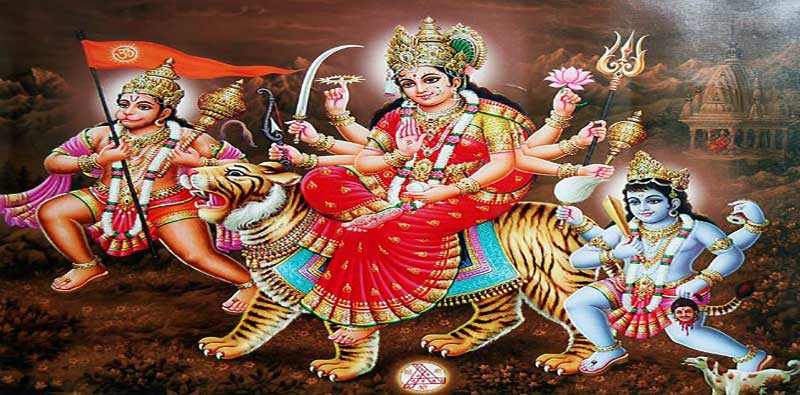
Shardiya Navratri 2026 will begin on 11 October 2026 and the nine-day worship period will continue through 19 October 2026. Vijayadashami will be observed on 20 October 2026.
The 9 Forms of Maa Durga During Navratri
Day 1 – Maa Shailputri
Maa Shailputri is worshipped on the first day of Navratri. The name Shailputri means “daughter of the mountain.” She is traditionally identified with Goddess Parvati in her form as the daughter of the Himalayas.
Maa Shailputri represents strength, stability and devotion. She is generally depicted riding a bull and carrying a trident and lotus.
Mantra:
Om Devi Shailputryai Namah
Traditional Bhog: Desi ghee
Devotees begin their Navratri worship by seeking Maa Shailputri’s blessings for strength, stability and a positive beginning.
Day 2 – Maa Brahmacharini
The second day of Navratri is dedicated to Maa Brahmacharini. This form of Maa Parvati is associated with penance, devotion, discipline and determination. She is traditionally depicted carrying a rosary and a kamandalu.
Her worship is associated with patience and the ability to remain dedicated to one’s spiritual path and responsibilities.
Mantra:
Om Devi Brahmacharinyai Namah
Traditional Bhog: Sugar
Devotees worship Maa Brahmacharini with the belief that sincere devotion and discipline help bring inner strength and peace.
Day 3 – Maa Chandraghanta
Maa Chandraghanta is worshipped on the third day of Navratri. Her name comes from the crescent moon, or Chandra, that adorns her forehead in the shape of a bell.
Her form represents courage, protection and divine power. She is traditionally depicted as a warrior goddess with a peaceful yet powerful presence.
Mantra:
Om Devi Chandraghantayai Namah
Traditional Bhog: Kheer or milk-based offerings
Devotees seek her blessings for courage, protection and freedom from fear.
Day 4 – Maa Kushmanda
The fourth day of Navratri is dedicated to Maa Kushmanda. In Hindu tradition, she is associated with cosmic energy, light and the creative power of the universe.
Her radiant form is connected with the energy of the Sun, and she is worshipped as a source of vitality and positive energy.
Mantra:
Om Devi Kushmandayai Namah
Traditional Bhog: Malpua
Maa Kushmanda is worshipped with prayers for health, prosperity, energy and happiness.
Day 5 – Maa Skandamata
Maa Skandamata is worshipped on the fifth day. She is known as the mother of Lord Skanda, also known as Kartikeya. Her form represents motherhood, compassion and protective strength.
She is traditionally shown holding Lord Skanda while seated on a lotus.
Mantra:
Om Devi Skandamatre Namah
Traditional Bhog: Banana
Devotees worship Maa Skandamata for family well-being, peace and maternal blessings.
Day 6 – Maa Katyayani
The sixth day of Navratri is dedicated to Maa Katyayani. She is regarded as a powerful warrior form of Maa Durga. Traditional accounts associate Maa Katyayani with the destruction of the demon Mahishasura.
Her form represents courage, determination and the power to overcome challenges.
Mantra:
Om Devi Katyayanyai Namah
Traditional Bhog: Honey
Devotees pray to Maa Katyayani for strength, confidence and the ability to overcome difficulties.
Day 7 – Maa Kalaratri
Maa Kalaratri is worshipped on the seventh day of Navratri. She is considered one of the most powerful and fierce forms of Maa Durga.
Although her appearance is fierce, devotees worship her as a protective form of Shakti. Her traditional symbolism is associated with overcoming fear, darkness and negative forces.
Mantra:
Om Devi Kalaratryai Namah
Traditional Bhog: Jaggery
Devotees light a diya and offer prayers to Maa Kalaratri for courage, protection and inner strength.
Day 8 – Maa Mahagauri
Maa Mahagauri is worshipped on the eighth day of Navratri. Her name means “extremely radiant or pure.” She represents peace, purity, grace and spiritual cleansing.
Maa Mahagauri is traditionally depicted in a peaceful form and is associated with calmness and divine compassion.
Mantra:
Om Devi Mahagauryai Namah
Traditional Bhog: Coconut
Ashtami is also considered an important day for Kanya Puja in many Hindu families. Young girls are traditionally worshipped as manifestations of the divine feminine.
Day 9 – Maa Siddhidatri
The ninth day of Navratri is dedicated to Maa Siddhidatri. She is traditionally associated with spiritual wisdom, divine blessings and siddhis, or spiritual attainments.
Maa Siddhidatri represents the completion of the Navdurga worship and the culmination of the nine-day spiritual journey.
Mantra:
Om Devi Siddhidatryai Namah
Traditional Bhog: Sesame seeds
Devotees pray to Maa Siddhidatri for wisdom, spiritual growth and divine grace.
Navratri 2026: 9 Forms of Maa Durga, Dates and Bhog
| Day | Date | Form of Maa Durga | Traditional Bhog |
|---|---|---|---|
| Day 1 | 11 October 2026 | Maa Shailputri | Desi Ghee |
| Day 2 | 12 October 2026 | Maa Brahmacharini | Sugar |
| Day 3 | 13 October 2026 | Maa Chandraghanta | Kheer |
| Day 4 | 14 October 2026 | Maa Kushmanda | Malpua |
| Day 5 | 15 October 2026 | Maa Skandamata | Banana |
| Day 6 | 16 October 2026 | Maa Katyayani | Honey |
| Day 7 | 17 October 2026 | Maa Kalaratri | Jaggery |
| Day 8 | 18 October 2026 | Maa Mahagauri | Coconut |
| Day 9 | 19 October 2026 | Maa Siddhidatri | Sesame Seeds |
These offerings are part of commonly followed Navratri traditions, although the exact bhog may differ between regions, temples and families.
Simple Puja Vidhi for the 9 Forms of Maa Durga
Navratri puja can be performed at home with devotion and according to one’s family tradition. On the first day, devotees traditionally begin with Ghatasthapana or Kalash Sthapana, followed by daily worship of the designated form of Maa Durga.
Before beginning the puja, clean the worship area and place a picture or idol of Maa Durga. Light a diya and incense, and offer flowers, kumkum, roli, akshat and other traditional puja items.
On each day, meditate on the particular form of Maa Durga and chant her mantra with devotion. Offer the traditional bhog or any suitable sattvic offering according to your family tradition.
After offering the bhog, perform Maa Durga’s aarti and seek blessings for peace, strength, prosperity and the well-being of the family. Prasad can then be distributed among family members.
Navratri Puja Samagri
The basic puja samagri may include a Maa Durga idol or picture, kalash, coconut, mango leaves, roli, kumkum, rice or akshat, flowers, red chunri, diya, ghee, incense, fruits and prasad.
For Ghatasthapana, additional items may be required according to the specific ritual followed by the family or according to the local Panchang.
Importance of Mantra Chanting During Navratri
Mantra chanting is an important part of devotional practice during Navratri. Devotees may chant the mantra associated with each form of Maa Durga or choose a simple Durga mantra for daily worship.
A commonly recited mantra is:
Om Dum Durgayai Namah
Regular chanting with concentration and devotion is traditionally considered a way of connecting the mind with the divine energy of Maa Durga.
Navratri Vrat and Devotional Practices
Many devotees observe fasting during Navratri. Some observe a fast throughout the nine days, while others fast on selected days such as the first and last day, Ashtami or Navami.
The form of fasting differs according to family tradition, region and individual circumstances. Apart from food restrictions, Navratri is traditionally viewed as a period for prayer, self-discipline, positive thinking and spiritual reflection.
Those observing a fast should choose food and fasting practices according to their health requirements.
Kanya Puja During Navratri
Kanya Puja is an important tradition in many households and is commonly performed on Ashtami or Navami. Young girls are respectfully worshipped as symbolic representations of the divine feminine.
The traditional ritual may include washing their feet, offering food, gifts or clothing and seeking their blessings. The exact method varies according to regional and family customs.
The Spiritual Meaning of the Nine Forms of Maa Durga
The nine forms of Maa Durga can also be understood symbolically as different qualities of Shakti. Maa Shailputri represents stability, Maa Brahmacharini represents discipline, Maa Chandraghanta represents courage, and Maa Kushmanda represents energy.
Maa Skandamata represents compassion and motherhood, Maa Katyayani represents determination, Maa Kalaratri represents fearlessness, Maa Mahagauri represents purity and Maa Siddhidatri represents spiritual wisdom.
Together, the nine forms create a powerful spiritual journey through different aspects of strength, devotion and inner transformation.
Why Navratri Is Celebrated
Navratri is traditionally associated with the worship of Goddess Durga and the victory of divine power over evil. Different regional traditions connect Navratri with different stories and forms of Goddess Shakti.
The festival is observed through prayers, fasting, devotional music, Durga Puja, Ghatasthapana, Kanya Puja and other regional traditions. The way Navratri is celebrated can vary significantly across different parts of India.
For devotees, these nine days provide an opportunity to spend more time in prayer, express gratitude and seek the blessings of Maa Durga.
Maa Durga Ke 9 Roop: A Navratri Journey
The nine forms of Maa Durga make Navratri more than a nine-day festival. Each day introduces devotees to a different expression of Shakti and offers an opportunity for prayer and reflection.
From the strength of Maa Shailputri to the spiritual grace of Maa Siddhidatri, the Navdurga tradition celebrates the many dimensions of divine feminine energy. Worshipping these forms with faith, devotion and respect for one’s family tradition makes Navratri a deeply meaningful spiritual occasion.